As an Amazon Associate DcSoundOp earns from qualifying purchases.
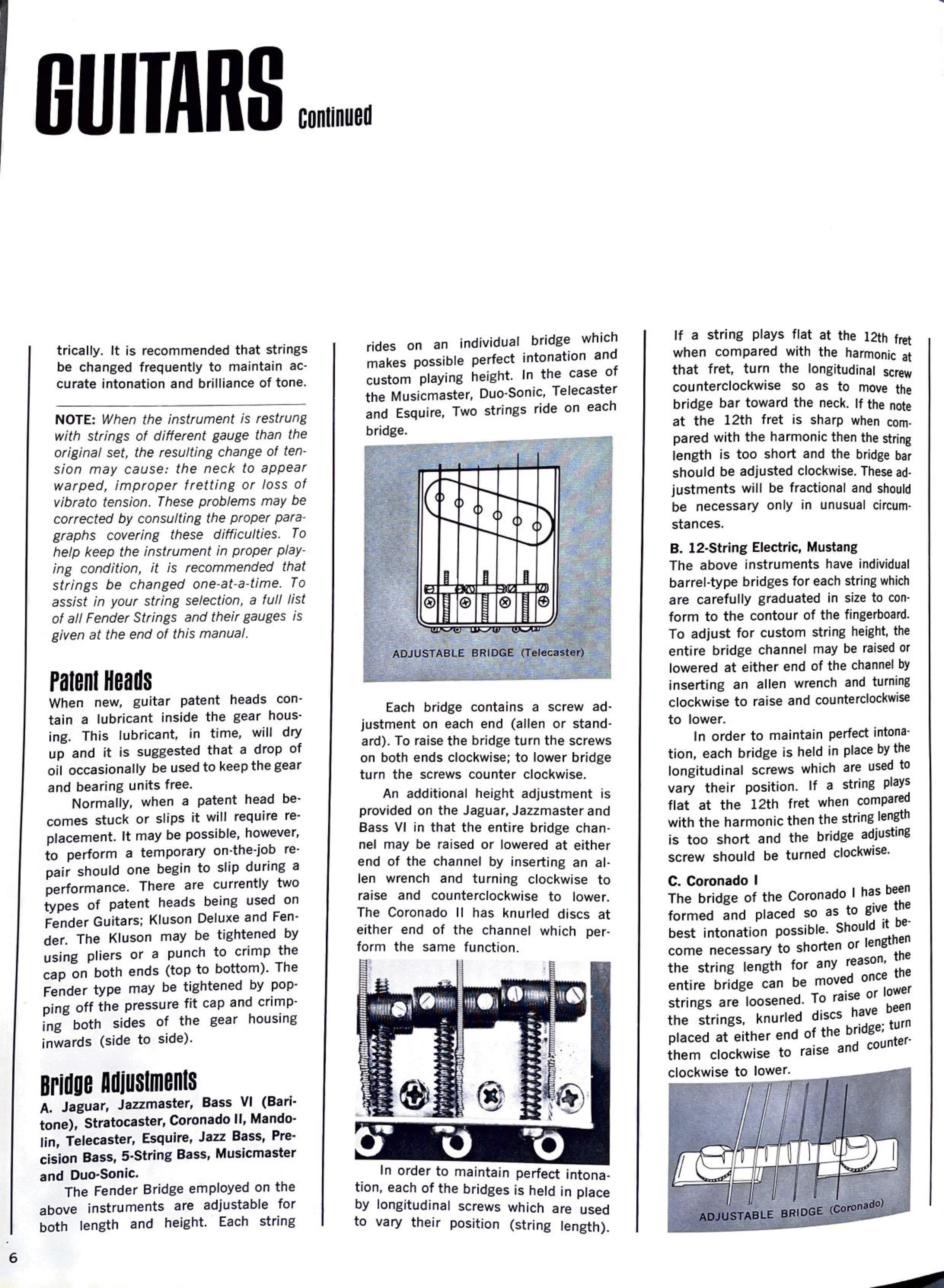
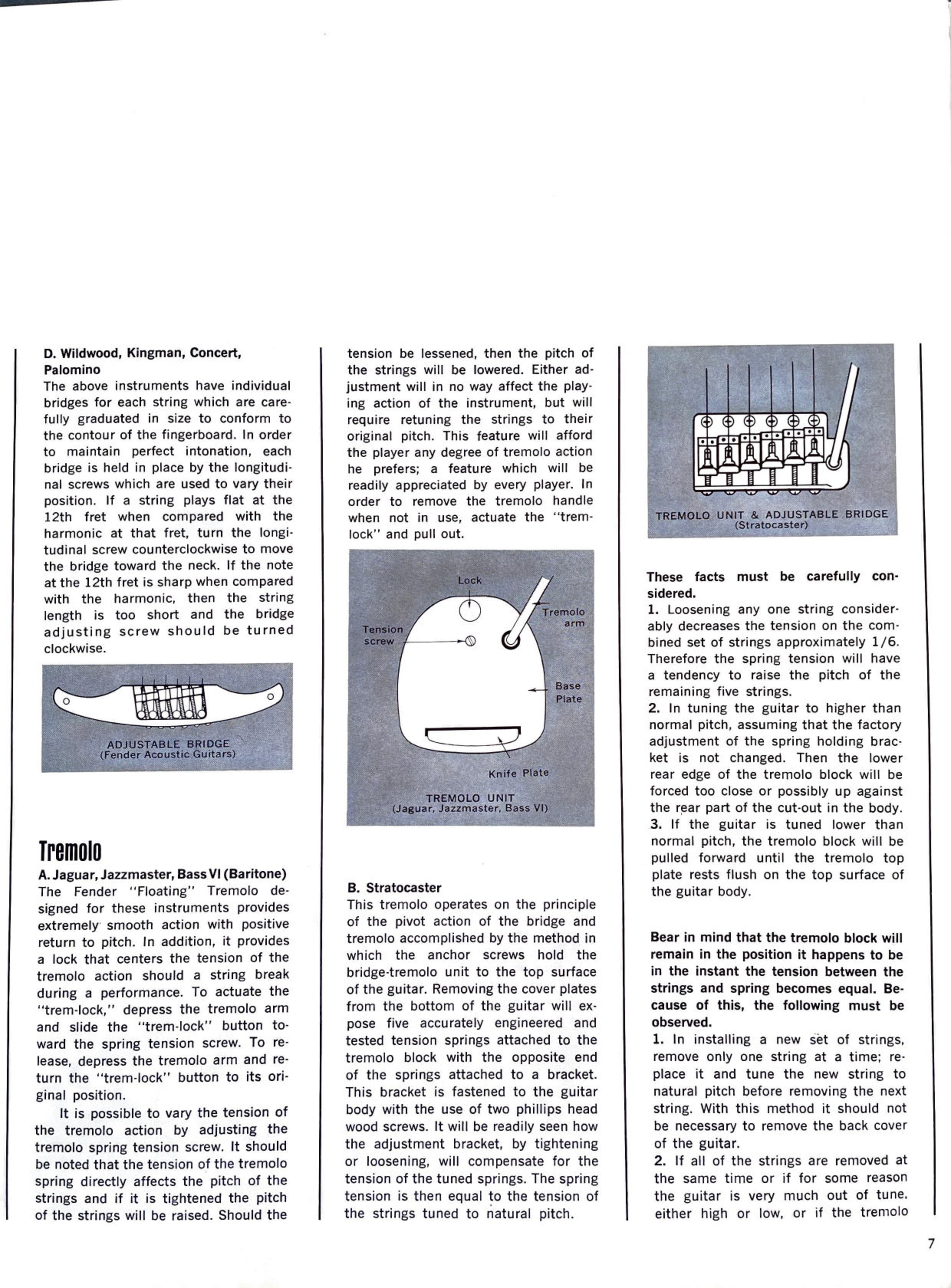
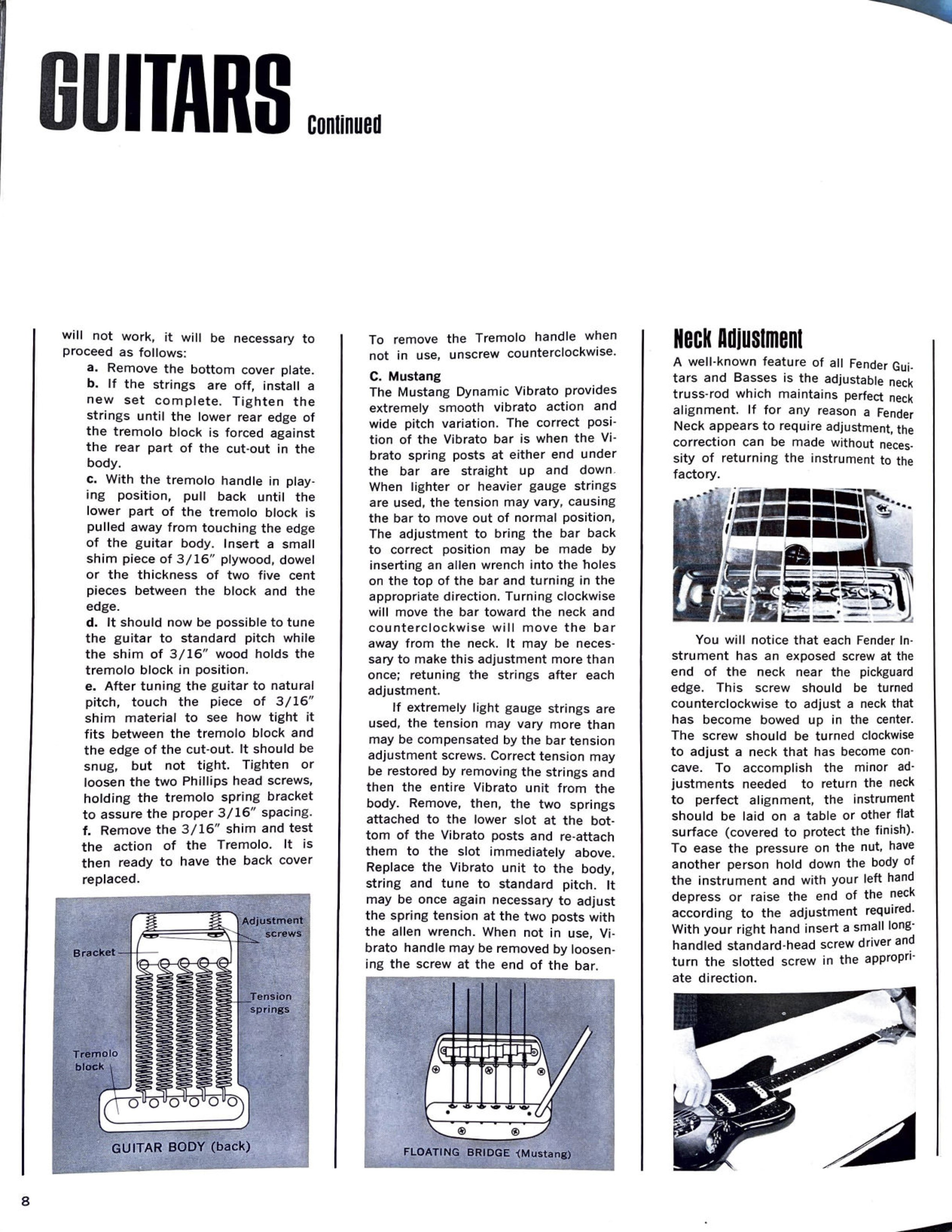
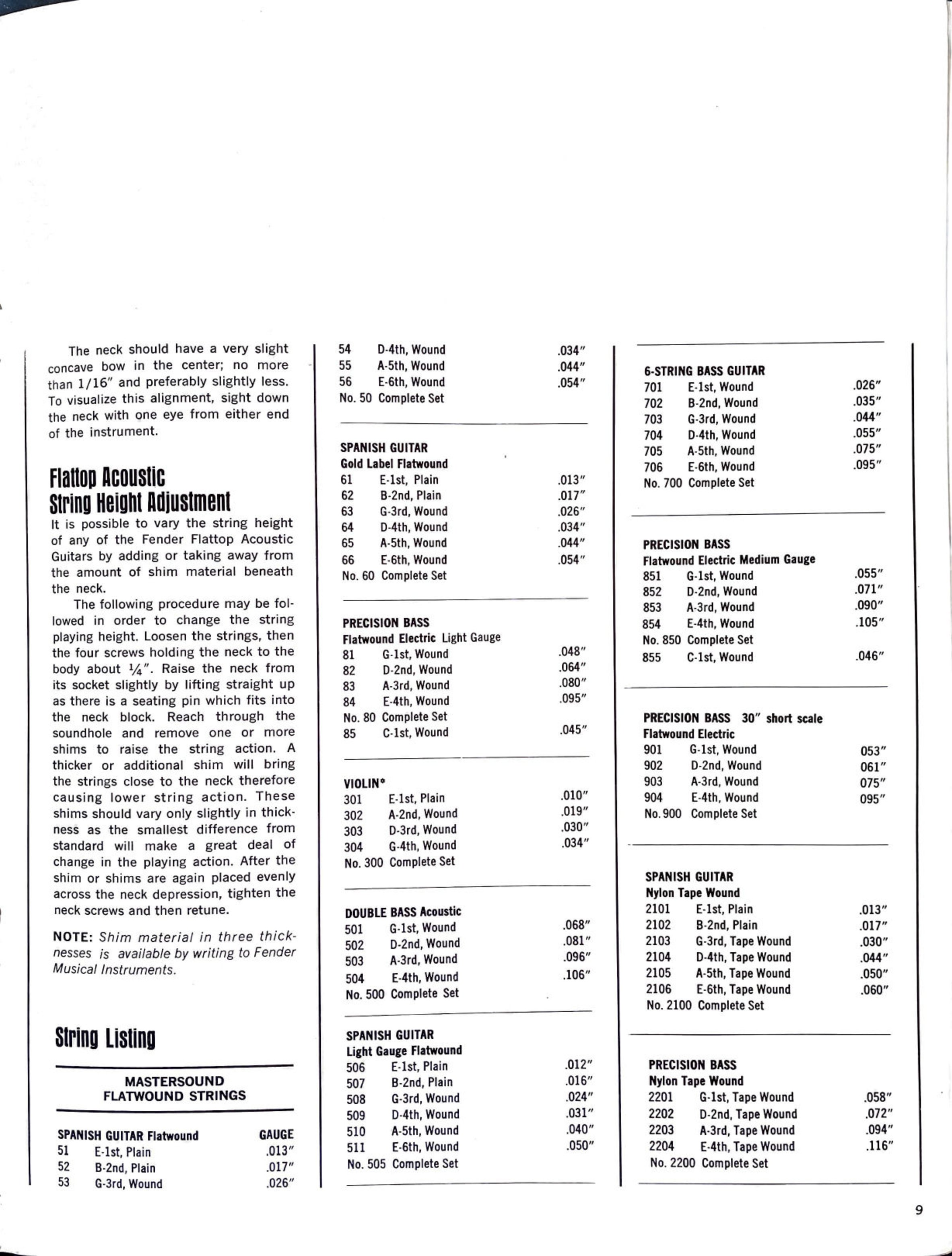
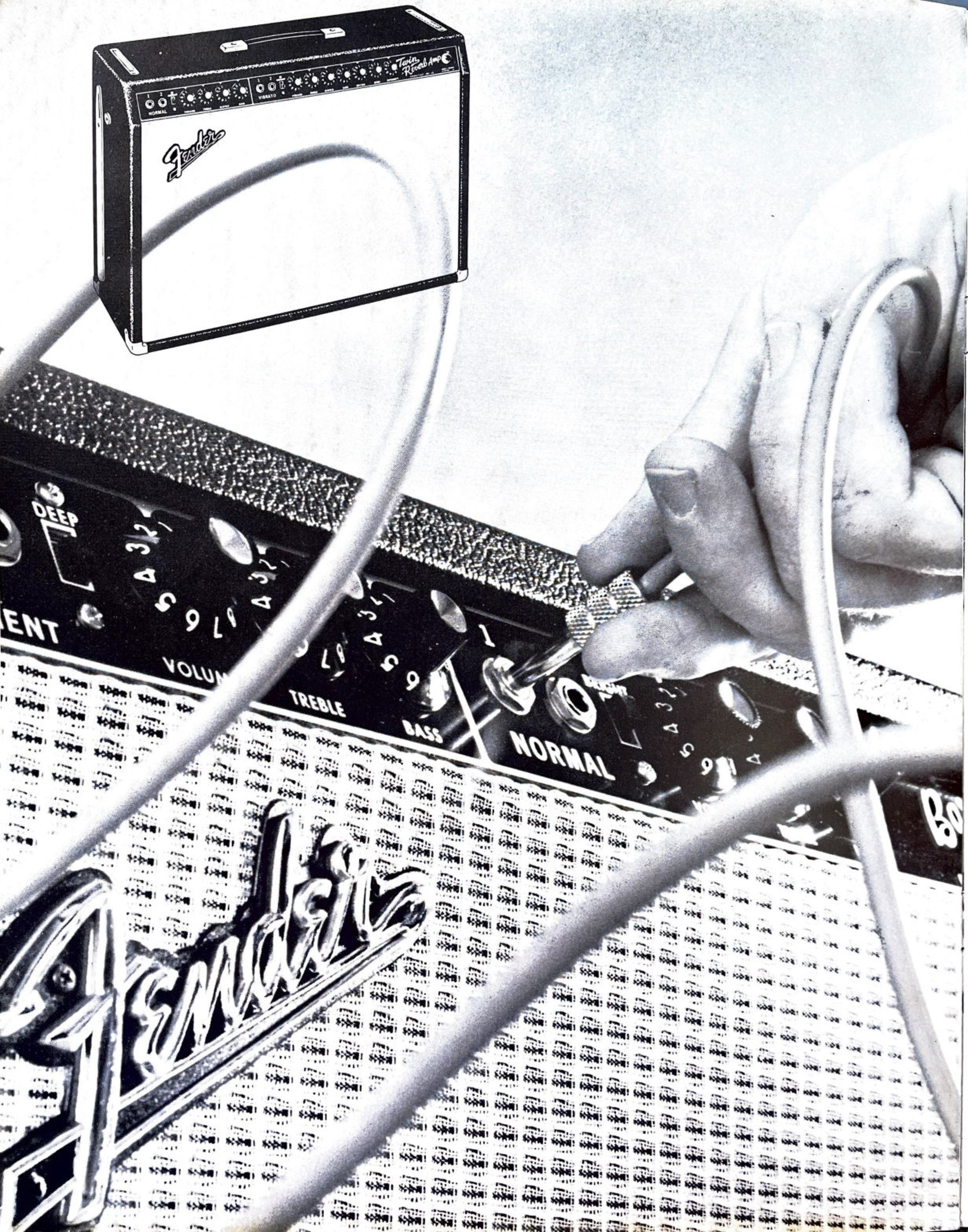
=== Page 1 ===
e Zo
» March. 1087
y u
Fo N ” ‘a |
– / ;
E p £ ;
– a,
y / Da
N ” L b M| |! E |
TELLO
j |
$ | | 1
A
A —- | |
=== Page 2 ===
RES: 51.0 NN tos ERE ya ver 7 a
: : ——— a La UA – y A A )
—_— EA a | -— me Ed
wa e . E – y :
e, An. j EEN ; | ora
NO A AR rn YES 5 NY £
dE AL HT ” E d
hm – Pesa L + “hs :
Eo e fr ie: 4 L 3
e q Ú pee E 1 1 10
NA ZO
-— A
3 e A e Y
– , de de 7
j L * a TE pr
Í Ss ZA 6 , :
E fo. Contents
a f e € a This manual is intended to be a guide for
e: e NN – A the musician or dealer wishing to make
y A . « minor adjustments or repairs without
yx y e V e , e El the need of consulting a professional
7 y 40 repair shop or returning the instrument
> ! Q A A to the factory. Its contents, while not
Eos e. vv f . ME 1 <= delving into major repairs, includes
LL — r A ul those areas which comprise over 90%
UN N , y — ú4 of the troubles and annoyances.
E a ” A.
LO AE Pe. GUITARS _—
— 7″ AS Ta. 5 ELECTRICAL CORDS
CENA. . == li Mn 5 STRINGS
ANI RE as 3
Za – a — 6 PATENT HEADS
DOCE oo > a NN 7 —
NA : y 4 “ 6 BRIDGE ADJUSTMENTS
VS a AN – 1 6 A. Jaguar, Jazzmaster, Bass VI
E a MA Ey UND | (Baritone), Stratocaster, Coronado
– AA Po EZ AA ll, Mandolin, Telecaster, Esquire,
NA Te — E ” EZ Jazz Bass, Precision Bass, 5-String
Ate NO v Á : / ss Bass, Musicmaster and Duo-Sonic.
Po a uu . / 6 B. 12-String Electric, Mustang
de N O” ——-_—.a 6 C. Coronado |
== Q – $ E 7 D. Wildwood, Kingman, Concert,
e. == E E / < Palomino
2 A… A amd / 7 TREMOLO
Ñ LA y Mad P o 7 A. Jaguar, Jazzmaster, Bass VI
N N y —«Q _“ E (Baritone)
(O a la 7 B. Stratocaster
ED: E E 7 YE 8 C. Mustang
w , 3 e hal LJ 8 NECK ADJUSTMENT
«A Ze 70007 VW — ULA Fo 8 FLATTOP ACOUSTIC STRING
N LARALL sal IE, s HEIGHT ADJUSTMENT
AOS AIN. Mi /a “7
7 ANN LL 78 9 STRING LISTING
£ ASAIIZINANAAN AL o) AMPLIFIERS (tube)
_ – E he RAN E E VELL
SECT DA AN E “o Aro 2 ¡EE rare
RAT AD A ro E VANE 13 TUBE SOCKETS
ARANA y SIDACI UN TA — AY 13 HUM BALANCE CONTROL
A NT AS | Y (Bassman On)
A 2 eZ 13 VIBRATO FAILURE
a NN Y 7 13 REVERBERATION FAILURE
ULA Xu ya 14 SPEAKERS
OO ANNA E “A ; Ame dean ones
A AR N Us — A 14 RE-CONING SPEAKERS
REE NY 77 14 INPUT NOISE
Po. NET _ f 0 PE “* 15 SPEAKER CORDS
Pa CP NA y A, A y
A ARIANE ÑN (o?) N 0, O ” A Y 15 TRANSFORMERS
no Ane O y 4 ani. 487€ 15 GROUND NOISE
a * [174177 o
ARNO DI fa Ra Fi 15 LIGHT SOURCES and PICKUP
Ne > *. [o] y z y y iL e UI A d E
SON y CODA 15 CIRCUIT SYMBOLS
PR r 4 EL eee, e
a 7 4 de Y E conyrign y Fender Musical Instruments
TA l 2 we $ p dd Ma WINE < A Divisas o ens Broadcasting Svstem, Inc.
=== Page 3 ===
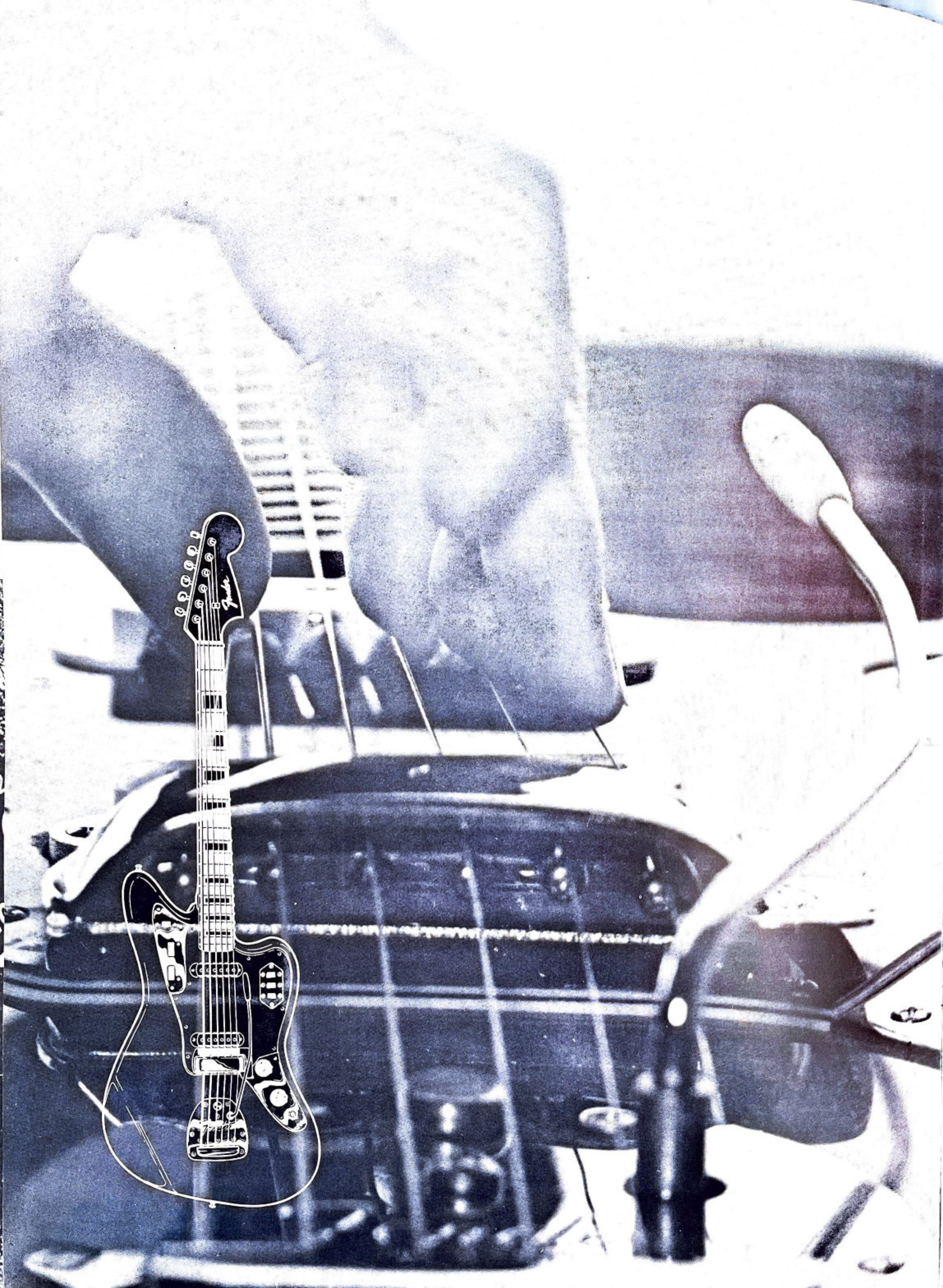
PROBLEM (SOURCE) PAGE:
( ? STRINGS CORDS — PICKUP STR. LENGTH STR. HEIGHT CONTROLS OTHER |
Complete Failure s [) Loose Connections — | 5
Intermitant Operation [) Loose Connections — | 5
|
|
Poor Intonation [) e Neck Adjustment | 5, 6,8
Poor Playing Action e ee e lec 6, 7,8
String Rattle e [) Neck Adjustment 5, 6,8
Seratchy Noise La) 5
Amplifiers (lube)— Quick Reference Chart
(SOURCE)
P
ii TUBES CORDS FUSE TRANSFORMER CONTROLS SPEAKER OTHER GER
, y 5:13
Intermitant Operation All o o | 14.15
Vibrato Failure 12AX7 Foot Pedal E
Foot Pedal,
Reverb Failure 1 Spring Chelrnal 13,14
Scratchy Noise o ni 13, 14
Frying Noise All 13,15
Complete Failure All [E e L . 13,14,15
e Jo Improper
round, Light Inter-
Hum | All ference, Hum Balance | 13-15
Control (Bassman)
3
—-
=== Page 4 ===
su Cod, uu
+ os “e
MA AAA a N – sa ms ETA me en a.
PRA a ee u ; : NE Ea E :
5 e AA DT OA IN RT E AAA
a e . o ira Comi E UN E Ta
A A LA Y ENEE a N a 7 % Y ED os BO LEA ds TE mares Ó EA ER E
AN A. PET L : PU me 5 re Pe ”= a E
jo E DD «— ¡ANT AA A Ea
MZ AEREO > 7 Ma “En. A TITO 2 Me a 1. ”_—
e e pu. ve ; ae YA a SENA A a
LE — NC a AE pue pr RA. E Eee 1 a – —
Ta pa Bas A SE SEED O a 4 La 1 AE TEA / 2
Bue, “Ne DENSNEa Be Eu — Mer A . EA 27: aa ——
Y ENT e gr – EA a : A A eo a
A MER O UA Te dae NN
ER] O (a a 18 TA TA –
OS E E E E
1 (> Eo e 2. Ey Bao A ES Cr e 4 OT E] N
q Ze PER TA EA 1 Gao NO e. Nr; ,
Pu ¡C E A Ea “Mot LA y
d e p AER TGD
MO RT e E 85% –
| e AN a
– e SA O DTO ;
a <= E CODI
! ” Ñ . A E + A h PON
|
| mo N i
.- y r
– ¡a ali DNA a y
r bt. _— NO « ,
” ¡is EAST E —
– .- ONO 2
“el e 4 á
E: ¡tr l e
1 + ; A ; Ls ¿”
. Be -. -”. E AAN A. – 3
I tos ” Ne 1 ” Xx e
– EE – a : —- LA !
vu Ae – Ls — , —— UN A ra :
EE e NAL – S.
ds pe — NDS MA ú ds
ls E y de
==] a – “PRE – ” 4 y E… 2.
6 == ¿el FEE A – o A x t ” e E É
. -— q + JE DD.
Ei £ LM Ke
Minos. 0 dereeer NN Ea Fai
ate aia im | : do. > | Pa – Ala
r y Y 3 DR .
, N ‘ECEEE A a | EA E
ereneE + —_ >. KE EE :
| EUNEA Ll Ya
Y : É N q [ eo “o —— y s x= a e q
se a 5 a = . E
TEN Y -l E ; 5
A E N da TS Co E + + , in “ar 1
LLORIA Eh a A de
LES > ú l 8 A 5 €
PERO EA ¿ ; A N , – a
va O ZN CC á E; b . %
LEVAS > A Me MUDA EE : No des ph E a
E E LE — Es x 7 | is
CURE TIAS MARA 6 E E,
== NE Y € * e e ” ” > »
vo E , Fe y V ,
——_— e a.
Aer DE E; =P ” ss Sy. |
y is –
E —_ xr -——-— e 6
=== Page 5 ===
AM“ o
0 Similar electrical problems may be- lack of use or too much use. Many plug must be added after the existing
set a solid body or semi-acoustic, be- times the controls will become noisy molded plug is cut off. The “quick type
cause the components in each are simply because they have not been used plug is a non-solder type and has a
virtually identical excepting only the pe- and the internal contacts have not been sharp point in the center of the plug
culiarities of the individual model. Nor- kept polished. Noise will occur as the and a set-screw on the side. The cord
mally, faults that occur in the electric control is turned. In other instances, ex- is pushed into the plug as far as pos-
guitar can be classified into these three treme use of the controls may have sible to form the “hot” wire connec-
categories: caused the surface to wear and become tion and the set screw tightened on the
1. Pickup failure rough and dry resulting in the same side to make the ground. The solder-
2. Control failure scratchy noise. In either event, there type plug must have the center or hot
3. Loose connections within are usually remedies to correct this con- wire of the cord soldered to the short or
the circuitry dition. Any electrical supply house can center pole of the plug and the outside
In almost all instances when the supply an item known as “Quiet-Trol” or ground wire soldered to the long or
guitar is completely dead the pickup or “No-Noise.” These are liquids having outside pole of the plug.
itself will be defective. The only other extreme penetrating qualities and a To keep cords in good condition, it is
failure that could cause complete lack small amount injected at the junction suggested that they should be removed
of response would be a short in the of the shaft and the body of the control from the amp and instrument by pull-
wiring or a broken lead wire which can lubricates the shaft. A small amount ing on the plug and not the cord itself.
be ruled out in most cases due to the squeezed into the control itself lubri- In addition, keep them from getting
mechanics of a guitar. cates the sliding contact and normally underfoot while on stage.
When the pickup has failed, it repairs the control for a long period of
means the replacement of the unit as time. Also, electrical supply houses
they normally cannot be repaired. This have a small applicator which has a
can be accomplished on all models ex- plastic top connected to a long needie Strings
cept the Stratocaster, Esquire and Tele- similar to a hypodermic needle which L .
caster by unscrewing the pickup adjust- makes the application of this liquid Occasionally a problem will occur with
ing screws all the way and removing very simple. a guitar that may appear to be in the
the pickup from the recess. In order to While there are other components circuit itself when in reality the strings
remove the pickups from the Strato- involved in the tone modification cir- may be at fault. One should always use
caster, Esquire and Telecaster, the pick- cuits within the guitar, the fact that a matched set of strings; never mixing
guard must be removed. To replace the relatively no voltage is generated in the one brand or one type with another
pickup, unsolder the two wires at the circuit makes failure of the condensers brand or different type because of the
pickup. Be certain to re-solder the wires and resistors very unlikely. Mechanical magnetic characteristics of the wire
to the new pickup as they were on problems such as loose wires or noisy which may vary considerably. One
the old. connections in the jack are something string may have a great deal more
which may be corrected easily. Should response magnetically than another.
any difficulties arise in locating the Therefore, ¡f strings are mixed, some
correct solder points, wiring diagrams o – pt while others quite
sa i : subdued resulting in very poor or non-
e e eo are available for all models Ur ma.
. h- —— aa — Normally, if one or two strings fail
”- to respond, one can eliminate any
: . thought of pickup problems because
Electrical Cords the manner in which the pickup is made
Problems often arise in the cord that will usually cause it to respond uniform-
connects the guitar to the amplifier. ly in all six string positions and the
These defective cords can cause un- case would be rare indeed where one
natural sounds, static, hum or inter- pole of the pickup would be less res-
mitant operation. Most cord problems ponsive than that of the others. One
Controls are in the plugs which may be divided should be careful to make certain that
into three types: molded, “quick”” and strings used are of a high magnetic
The problem of control noise is the re- solder. Molded plugs may not be re- quality and capable of producing good
sult of one of two factors; either the paired; to save the cord a metal type results, not just accoustically but elec-
5
=== Page 6 ===
GUI TARS continued
trically. It is recommended that strings rides on an individual bridge which If a string plays flat at the 12th fret
be changed frequently to maintain ac- makes possible perfect intonation and when compared with the harmonic at
curate intonation and brilliance of tone. custom playing height. In the case of that fret, turn the longitudinal screw
e. — the Musicmaster, Duo-Sonic, Telecaster counterclockwise so as to move the
NOTE: When the instrument is restrung and Esquire, Two strings ride on each bridge bar toward the neck. If the note
with strings of different gauge than the bridge. at the 12th fret is sharp when com-
original set, the resulting change of ten- a EN SA E pared with the harmonic then the string
sion may cause: the neck to appear o da BEA DS .- – length is too short and the bridge bar
warped, improper fretting or loss of A + “UN E a should be adjusted clockwise. These ad-
vibrato tension. These problems may be er | a Ea justments will be fractional and should
corrected by consulting the proper para- TA a | E be necessary only in unusual circum-
graphs covering these difficulties. To EA O) a stances.
ana “— e instuman: in proper play do. – E B. 12-String Electric, Mustang
4 Ae nienrgr a a e : ; : E The above instruments have individual
me E e o dm 7 E et bo Ba E barrel-type bridges for each string which
assist in your string selection, a full list 4 pe Mene | E ara: emoÑully pradustod lala Yo che
of all – Aga su De – —— E L- a “mm form to the contour of the fingerboard.
RRE — EE. e To adjust for custom string height, the
o ADJUSTABLE BR DEE ec entire bridge channel may be raised or
Patent Heads E E E lowered at thor end of ie mn
p inserting an allen wrench and turning
Un í eur te o. , Each bridge contains a screw ad- clockwise to raise and counterclockwise
ing. This lubricant, in time, will dry justment on each end (allen or stand- to lower. — Mon:
up and it is suggested that a drop of ard). To raise the bridge turn the screws . In order to maintain perfect in .
vil occasionally be used to keep the gear on both ends clockwise; to lower bridge tion, each bridge is held in place by the
and bearing units free. turn the screws counter clockwise. longitudinal screws which are to
Normally, when a patent head be- An additional height adjustment is vary their position. If a string o.
comes stuck or slips it will require re- provided on the Jaguar, Jazzmaster and flat at the 12th fret when campa
placement. It may be possible, however, Bass VI in that the entire bridge chan- with the harmonic then the soe
to perform a temporary on-the-job re- nel may be raised or lowered at either is too short and the bridge . –
pair should one begin to slip during a end of the channel by inserting an al- screw should be turned clockwise.
performance. There are currently two len wrench and turning clockwise to C. Coronado |
types of patent heads being used on raise and counterclockwise to lower. The bridge of the Coronado | has been
Fender Guitars; Kluson Deluxe and Fen- The Coronado || has knurled discs at formed and placed so as to give the
der. The Kluson may be tightened by either end of the channel which per- best intonation possible. Should it be-
using pliers or a punch to crimp the form the same function. come necessary to shorten or Jengthen
cap on both ends (top to bottom). The E E E the string length for any reason, the
Fender type may be tightened by pop- – – a : entire bridge can be mov ed once the
ping off the pressure fit cap and crimp- mi Qui ‘ 1 strings are loosened. To raise or lower
ing both sides of the gear housing = ” = = E the strings, knurled discs have been
inwards (side to side). der: ] PT: placed at either end of the bridge: LN
: E is – :- them clockwise to raise and coun
Bridge nújusiments ES – 3 clockwise to lower.
A. Jaguar, Jazzmaster, Bass VI (Bari- HE vB Es 1 E – A a TE –
tone), Stratocaster, Coronado II, Mando- – => E > E [E
lin, Telecaster, Esquire, Jazz Bass, Pre- e 1 ES
cision Bass, 5-String Bass, Musicmaster he u al US
y In order to maintain perfect intona- 1 Cr y NL
The Fender Bridge employed on the tion, each of the bridges is held in place E RE
above instruments are adjustable for by longitudinal screws which are used 1 E 1 –
both length and height. Each string to vary their position (string Post ISTABLE BRIDGE
6
— es”
=== Page 7 ===
eze y –
D. Wildwood, Kingman, Concert, tension be lessened, then the pitch of
Palomino the strings will be lowered. Either ad-
The above instruments have individual justment will in no way affect the play- 2)
bridges for each string which are care- ing action of the instrument, but will ,
fully graduated in size to conform to require retuning the strings to their POPOGO y
the contour of the fingerboard. In order original pitch. This feature will afford e 0 ODO
to maintain perfect intonation, each the player any degree of tremolo action ALA AJAJA
bridge is held in place by the longitudi- he prefers; a feature which will be E VU
nal screws which are used to vary their readily appreciated by every player. In sE HE í u A
position. If a string plays flat at the order to remove the tremolo handle e: TA “E
12th fret when compared with the when not in use, actuate the “trem- RE JNIT 4 ADJUSTABLE BRIDGE
harmonic at that fret, turn the longi- lock” and pull out. Eo 2 OS
tudinal screw counterciockwise to move
the bridge toward the neck. If the note
at the 12th fret is sharp when compared These facts must be carefully con-
with the harmonic, then the string sidered. . .
length is too short and the bridge a 1. Loosening any one string consider-
adjusting screw should be turned ably decreases the tension on the com-
clockwise. O e bined set of strings approximately 1/6.
Therefore the spring tension will have
; s a tendency to raise the pitch of the
HATE es remaining five strings.
dd se 2. In tuning the guitar to higher than
E] normal pitch, assuming that the factory
ADJUS E : o Ja adjustment of the spring holding brac-
a va : E Te. ket is not changed. Then the lower
Kai rear edge of the tremolo block will be
REMOLO UNIT forced too close or possibly up against
Jaguar, Jazzmaster, Bas: the rear part of the cut-out in the body.
– 3. If the guitar is tuned lower than
Tremolo normal pitch, the tremolo block will be
pulled forward until the tremolo top
A. Jaguar, Jazzmaster, Bass VI (Baritone) plate rests flush on the top surface of
The Fender “Floating” Tremolo de- B. Stratocaster the guitar body.
signed for these instruments provides This tremolo operates on the principle
extremely smooth action with positive of the pivot action of the bridge and
return to pitch. In addition, it provides tremolo accomplished by the method in Bear in mind that the tremolo block will
a lock that centers the tension of the which the anchor screws hold the remain in the position it happens to be
tremolo action should a string break bridge-tremolo unit to the top surface in the instant the tension between the
during a performance. To actuate the of the guitar. Removing the cover plates strings and spring becomes equal. Be-
“trem-lock,” depress the tremolo arm from the bottom of the guitar will ex- cause of this, the following must be
and slide the “trem-lock’” button to- pose five accurately engineered and observed.
ward the spring tension screw. To re- tested tension springs attached to the 1. In installing a new set of strings,
lease, depress the tremolo arm and re- tremolo block with the opposite end remove only one string at a time; re-
turn the “trem-lock” button to its ori- of the springs attached to a bracket. place it and tune the new string to
ginal position. This bracket is fastened to the guitar natural pitch before removing the next
It is possible to vary the tension of body with the use of two phillips head string. With this method it should not
the tremolo action by adjusting the wood screws. It will be readily seen how be necessary to remove the back cover
tremolo spring tension screw. It should the adjustment bracket, by tightening of the guitar.
be noted that the tension of the tremolo or loosening, will compensate for the 2. If all of the strings are removed at
spring directly affects the pitch of the tension of the tuned springs. The spring the same time or if for some reason
strings and if it is tightened the pitch tension is then equal to the tension of the guitar is very much out of tune,
of the strings will be raised. Should the the strings tuned to natural pitch. either high or low, or if the tremolo
7
=== Page 8 ===
u | NARS continued
Will not work, it will be necessary to To remove the Tremolo handle when Neck Adjustment
proceed as follows: not in use, unscrew counterclockwise. ,
a. Remove the bottom cover plate. C. Must E wel-inowa Testure of all Fender Gui-
b. If the strings are off, install a Dota: Mi ides tu ana —— E the adjustable neck
OW 2 compleis: “Tishtan iu The Mustang Dynamic Vibrato provi r truss-rod which maintains perfect neck
strings until the lower rear edge of mie scileaco viera zación AN alignment. If for any reason a Fender
the tremolo block is forced against wide pitch variation. The em Neck appears to require adjustment, the
fis rear part-0f the cubent Ín the tion of the Vibrato bar is when the Vi- correction can be made without neces-
body. brato spring posts at either end under sity of returning the instrument to the
5 . the bar are straight up and down. factory.
€. With the tremolo handle in play- When lighter or heavier gauge strings só ——
mg position, pull back until the are used, the tension may vary, causing sa |- | Li 1.
lower part of the tremolo block is the bar to move out of normal position, — —— s-
pulled away from touching the edge The adjustment to bring the bar back 1 E
of the guitar body. Insert a smail to correct position may be made by | peas E ta
shim piece of 3/16″ plywood, dowel inserting an allen wrench into the holes f m_—_
or the thickness of two five cent on the top of the bar and turning in the == y
pieces between the block and the appropriate direction. Turning clockwise y ES
edge. . will move the bar toward the neck and A == —’ —
d. It should now be possible to tune counterclockwise will move the bar e
the guitar to standard pitch while away from the neck. It may be neces- You will notice that each Fender In-
the shim of 3/16” wood holds the sary to make this adjustment more than strument has an exposed screw at the
tremolo block in position. once; retuning the strings after each end of the neck near the pickguard
e. After tuning the guitar to natural adjustment. edge. This screw should be turned
pitch, touch the piece of 3/16” If extremely light gauge strings are counterclockwise to adjust a neck that
shim material to see how tight it used, the tension may vary more than has become bowed up in the center.
fits between the tremolo block and may be compensated by the bar tension The screw should be turned clockwise
the edge of the cut-out. It should be adjustment screws. Correct tension may to adjust a neck that has become con-
snug, but not tight. Tighten or be restored by removing the strings and cave. To accomplish the minor ad-
loosen the two Phillips head screws, then the entire Vibrato unit from the justments needed to return the neck
holding the tremolo spring bracket body. Remove, then, the two springs to perfect alignment, the instrument
to assure the proper 3/16” spacing. atinciad-to tha lr slot at the bot- should be laid on a table or other flat
f. -Remove-the 3/16” shimang hay tom of the Vibrato posts and re-attach surface (covered to protect the finish).
the action of the Tremolo. lt is them to the slot immediately above To ease the pressure on the nut, have
then ready to have the back cover Replace the Vibrato unit to the body, another person hold down the body of
replaced. string and tune to standard pitch. It the instrument and with your left hand
NC eN Re DE a may be once again necessary to adjust depress or raise the end of the o”
ass q Z— E ón the spring tension at the two posts with according to the adjustment require ;
a crews the allen wrench. When not in use, Vi- With your right hand insert a small long
e ón De brato handle may be removed by loosen- handied standard-head screw driver e
ececce : mE ing the screw at the end of the bar. turn the slotted screw in the approbr
=>=== — Teo EA — ate direction.
=== SI de e E E L
500000 CC Caiidao) ==
a | ZA –
— GUITAR BODY (back) — FLOATING BRIDGE (Mustang v
8
E ”
=== Page 9 ===
”> y
|
|
|
|
y
The neck should have a very slight 54 D-4th, Wound 034” A
| concave bow in the center; no more 55 A-5th, Wound .044” 6-STRING BASS GUITAR
than 1/16” and preferably slightly less. 56 E-6th, Wound 054″ 701 E-Ist, Wound 1026”
To visualize this alignment, sight down No. 50 Complete Set 702 B-2nd, Wound 035”
the neck with one eye from either end _ 703 G-3rd, Wound 044”
of the instrument. 704 D-4th, Wound 055”
SPANISH GUITAR 705 A-5th, Wound 075”
‘ Gold Label Flatwound – 706 — E-6th, Wound .095″
Flatlop Acoustic 61 E-lst, Plain 013″ No. 700 Complete Set
Siring Height Adjustment 6
63 G-3rd, Wound 026″ ——]—¡— ;o;[———————][—————
It is possible to vary the string height 64 D-4th, Wound 034”
of any of the Fender Flattop Acoustic 65 A-5th, Wound 044” PRECISION BASS
Guitars by adding or taking away from 66 E-6th, Wound 054” Flatwound Electric Medium Gauge
the amount of shim material beneath No. 60 Complete Set 851 G-1st, Wound 055”
the neck. 852 — D-2nd, Wound .071”
The following procedure may be fol- E ee 853 A-3rd, Wound 090”
lowed in order to change the string PRECISION BASS 854 E-4th, Wound 105”
playing height. Loosen the strings, then Flatwound Electric Light Gauge No. 850 Complete Set
the four screws holding the neck to the 81 G-1st, Wound 048″ 855 C-1st, Wound 046”
body about 14”. Raise the neck from 82 D-2nd, Wound 064”
its socket slightly by lifting straight up 83 A-3rd, Wound 080” o o——][]
as there is a seating pin which fits into 84 E-4th, Wound .095”
the neck block. Reach through the No. 80 Complete Set PRECISION BASS 30” short scale
soundhole and remove one or more 85 C-1st, Wound .045” Flatwound Electric
shims to raise the string action. A 901 G-1st, Wound 053″
thicker or additional shim will bring 902 D-2nd, Wound 061”
the strings close to the neck therefore VIOLIN? 903 A-3rd, Wound 075”
causing lower string action. These 301 E-1st, Plain 010” 904 E-4th, Wound 095”
shims should vary only slightly in thick- 302 A-2nd, Wound .019” No.900 Complete Set
ness as the smallest difference from 303 D-3rd, Wound .030”
standard will make a great deal of 304 — G-4th, Wound .034″ o
change in the playing action. After the No. 300 Complete Set
shim or shims are again placed evenly SPANISH GUITAR
across the neck depression, tighten the E Nylon Tape Wound
| neck screws and then retune. DOUBLE BASS Acoustic 2101 E-1st, Plain .013”
. o , -1st, Wound .068” 2102 B-2nd, Plain 017”
NOTE: Shim material in three thick- . se. Wound 081″ 2103 G-3rd, Tape Wound 1030”
nesses is available by writing to Fender 503 A-3rd, Wound 096” 2104 D-4th, Tape Wound 044”
MUsical instruments, 504 E-Ath, Wound 106″ 2105 A-Sth, Tape Wound .050”
No. 500 Complete Set 2106 E-6th, Tape Wound .060”
a A —_—————;—] No. 2100 Complete Set
Siring Listing SPANISH GUITAR ——
Light Gauge Flatwound
——_————————— 506 E-1st, Plain 012″ PRECISION BASS
MASTERSOUND 507 B-2nd, Plain .016” Nylon Tape Wound
FLATWOUND STRINGS 508 G-3rd, Wound .024″ 2201 G-1st, Tape Wound .058” –
a 509 D-4th, Wound .031″ 2202 D-2nd, Tape Wound 072″
SPANISH GUITAR Flatwound GAUGE 510 A-Sth, Wound 040″ 2203 A-3rd, Tape Wound .094″
51 E-1st, Plain 013″ 511 E-6th, Wound 050” 2204 E-4th, Tape Wound 116”
52 B-2nd, Plain 017” No. 505 Complete Set No. 2200 Complete Set
53 G-3rd, Wound .026” —£2w>_— Do”
9
5 A
=== Page 10 ===
np
E ——
a— ma € |
. —— els .” a |
Y DOT n Ta
o —— |
8 | di
f HI
á D, | |
| E í j
ñ ue – |
a ——Z -— E j | |
y a y E a |
a x A y ES E y
ñ AA E , á ie. EZ kr e E, N
e REO o y uu ú
TA in 2231 A 5 — a a :
= td ino Eaantes, y – E A q a. ; AE
* “aa A EN j Xx LY 1
a : io ñ 4 7 da 8: : NO er Aa 7 AE, A A > e Bos
“mA EIA ? YA: >. Es.
Que ed ¿Mi — Pe E ,- NE — v, ,
en AA Ae N, ras j 7 L
( : una + AA 1 E pesos E A sé ue T ——— |
Y y Maio A y ED 1
Et + E w 7 ” Er PRA E _-—
N – z s : “Tag ¡iu —
+ e – Ar Ly GA L ss
J – NN =a , ==. = e 4 “u
[a AN AU A . >
K L- + Y 4 – q -“ 2 S
ENT : Palco LAN s |
e £u. N A »
y < ” DS N <q N asia
E E – e < ¡
da TI A SA way UE
– “on o: —_ Je on Me ETA Xx “a — EN
só. ta. ia: hs E E RN “a _. Mia – > E , $
Te 777 AP Mio O no Es > * d
sed “.. Yon. y “E sio; PAE Ln RA o a Mi a per ers _. e Ne; E —— a –
22 E -_. Ma LR y fi E ma A a Ne Tm o TE y |
“a. Mo EA LEE “PUE ar Mea Me! Me A o_o – a 42 ñ
. Sr ms rr “a aa e me AA ba Aa si – a A ” |
: ” Piso o. A “a y e , ST NULA A DN: o. so e — E des: : : e “ .
*. *:De A” a, +. tia Mu) 1 f, _ Ser ms “a Sia o a = asi le ‘ 3 -. A |
dol, 0 de Ne Na ma ” d+ | |
* e mA. “E dina, ye sms Lee VAR Ma DES d == So SF y |
” NT. E AN . ! É r PEL DE o Sl MS NE Re e
ETE na, “n.d y MI Mia Ma HS da ss – a “E
Ne (A hi a Ral E Te de ay —_———
| | » ; , | a Soja Le => em 27M: E — e — e ,
E A > “>e: JE 1 4 MOE E Fa — o. _ – = as Mes *.. a de de e a |
al N ZA 00 — MD E A das
f 77 e -_ = *. E bas: o RE Pm ÓN me m =. Es – X
/ Ea . 7 E O y A ay, LA a ‘ M. Mio] Mito. Mo! lo. . Ne a de da A . N
| > A ee | y E Hai “un e e == DER Qu ¿rs
” NN ME as e A to. Mc 2 Ma: e >. — ona: a e eN a o da RE E.
. MA * a » A Me “a UTA a 2 e e me _ _. e e = T o | Í
¿ r 7 7 a Maty Tn € rd Ao eos. ME E aa us A
, “ ( d Pr Meses “Do. a 6. Py, —. —_ mai; _— -_ = a es a a .
“.. 7d – SERRA E
… “e se re Ñ – So Nu o. aa me, a. — __ _ — a a == – do == s
— Pr Nba os JT ERA Cp ja
> 0 … .. Re ó “… — e e: RE AE PRUEE A e me mm. —. – RI: E
— F MS OA a TE toa: ENEE o
“. ya + e ho YN ”. ” 7 ss … Cl … “ 2. e. PT e e me me E=E=lLI
>. – e.” … … S A de y TUNE me me Pa op do E pe ENERELLL
: Mo Mies. Am ia, o “o_o Masint e me ue PT So: e E RE e
y Ae: “a pitos! he — ED —_ m_— me e e 3.
í fo a a o A soja e. ha SNA: vob: SAT dolar: ¿ctas
*.: > al E 1
| al” e des. nr
Amazon and the Amazon logo are trademarks of Amazon.com, Inc, or its affiliates.