Drag the faders and pan knobs, click Mute/Cue/Post, and click a channel’s name to open its EQ, aux send, and matrix routing controls. Everything above is live. Nothing here is wired to real audio or real hardware; keep reading for exactly what that means.
What This Is
The console above recreates VACS Client Workstation, the Windows control software CorTek Software built for Jim Gamble’s DCX-60 live sound console. The original program was handed to us as Vacs Client 2.49F.exe, a mid-2000s 32-bit Win32 app that only runs on Windows and only does anything useful when it’s cabled to a physical DCX-60. We rebuilt its look and behavior as a single self-contained HTML/CSS/JavaScript page so anyone can see and poke at it from a browser (phone, tablet, or desktop) with nothing to install and no console required.
How This Demo Works vs. How the Real Thing Worked
The real VACS Client was a procedural C, Win32 GDI application. Faders, knobs, and VU meters were bitmap sprites blitted onto MDI child windows (a “FullView,” a “ZoomView,” and a Master window). The entire physical layout of a given console (how many channels, where every fader and button sits) was not hard-coded into the .exe; it was read at startup from a binary file called dcx.bin, so the same client could drive different Gamble desks. Every control change was pushed out over a real RS-232 serial connection to the console (38,400 baud, 8 data bits, no parity, COM1 by default), with MIDI available for SMPTE/MTC-driven scene sequencing and a TCP path to a “GServer” for networked rigs. EQ curves were genuinely parametric, VU meters used log-scaled peak/average ballistics, and mute/cue/group/stereo-pair logic actually re-routed audio inside the console. Scenes were recallable from function keys and autosaved every three minutes to a file named, memorably, LA$T.mix.
This browser demo shares none of that plumbing. It is one static HTML file: CSS for the retro Windows chrome and wood-toned channel strips, plain JavaScript for the interaction, with no server, no serial port, no MIDI, and no console-definition file to parse. The EQ readouts, pan knobs, and Mute/Cue/Post buttons update on-screen state only. The meters don’t respond to audio at all: they sweep back and forth on a slow timer, staggered channel to channel so the sweep ripples across the console (a deliberate homage to a certain dashboard scanner light, not an attempt to fake real VU ballistics). Every channel strip is stamped out by the same loop of JavaScript rather than driven by a real console’s zone map. It runs anywhere a modern browser does.
Credit: the Vacs-Client Source on GitHub
Jim Gamble’s original DCX control software has since been open-sourced and modernized at github.com/styck/Vacs-Client (“Jim Gamble DCX Console control”), maintained by a GitHub user going by styck, almost certainly Francis Styck, credited on Gamble’s own site as the network and server software engineer on the original DCX project. The repository is a CMake-buildable update of the Windows-95-era C codebase (Win32 GDI UI, WinMM for MIDI, raw serial I/O for the DCX protocol), kept alive so the small number of surviving DCX-60 owners can keep their consoles running. Its CodeDocumentation.md and Modernization.md write-ups are what let us fact-check this demo: they’re where the DCX-60 identification, the 38,400-baud/8N1/COM1 serial settings, the dcx.bin dependency, and the general MDI/zone-map architecture described above came from, rather than guessing from the .exe alone.
Jim Gamble & the Consoles Behind VACS
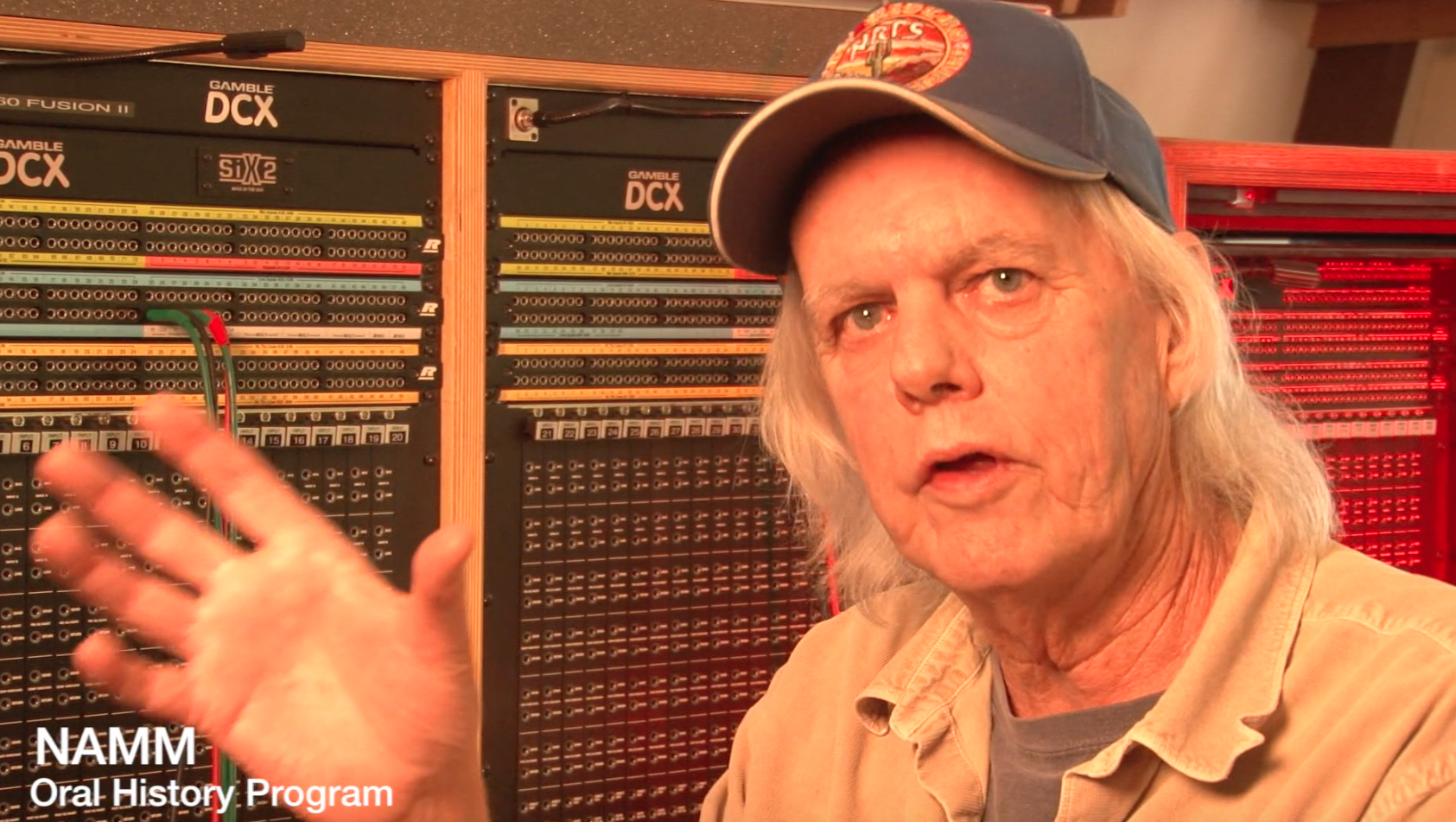
Jim Gamble spent close to fifty years designing consoles that gave front-of-house and monitor engineers, in NAMM’s words, “ultimate control of the audio being mixed.” He got his start working for one of the original touring sound reinforcement companies, and the decades he then spent mixing some of the biggest touring acts of each era fed directly back into how he built consoles.
1970s: Tycobrahe and the “Blue Board”
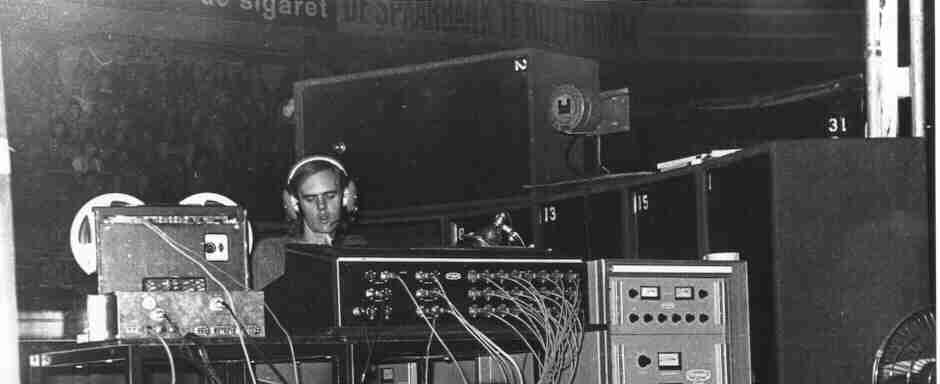
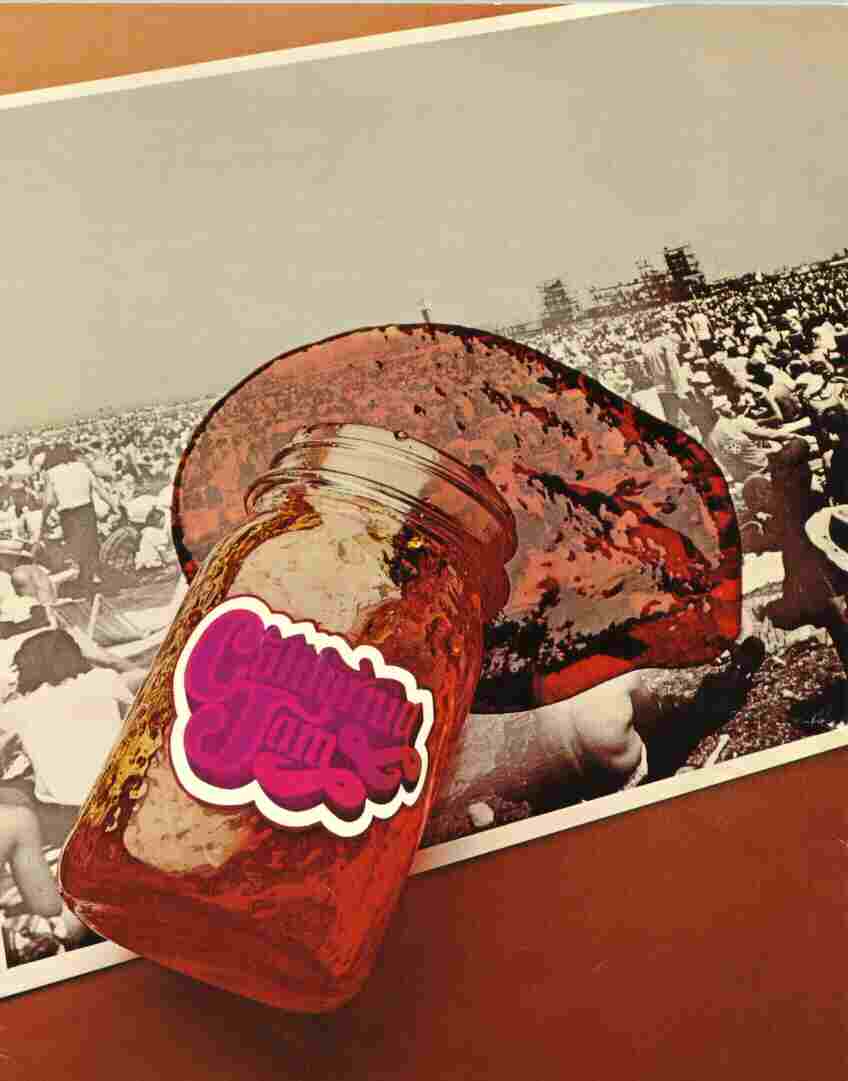
Gamble cut his teeth at Tycobrahe Sound Company, the legendary Southern California touring sound outfit. He’s pictured with Tycobrahe’s “Black Board” on the Rolling Stones’ 1973 European tour in Rotterdam, and by 1974 Tycobrahe was running his now-famous “Blue Board”, including at California Jam, the massive 1974 festival at the Ontario Motor Speedway headlined by Deep Purple, Emerson Lake & Palmer, and Black Sabbath, where Tycobrahe supplied one of the sound towers.

1980s: The EX Series
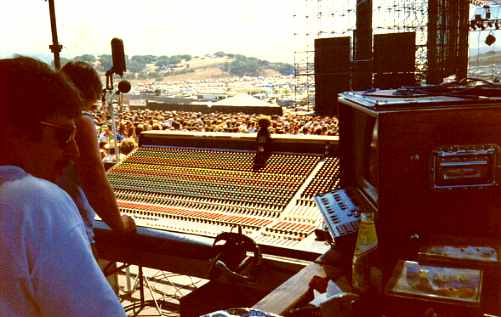
The next generation of Gamble consoles was the all-analog EX series (including the EX40, EX56, HC40, and SC-32), American competition for the UK’s Midas PR-series desks of the same era, and a staple of large touring rigs and major acts through the decade. Gamble’s crew also crossed paths with the Grateful Dead’s longtime engineers Don Pearson and Dan Healy, pictured together at Laguna Seca in 1988.
1990s: Going Digitally-Controlled: the DCX Series
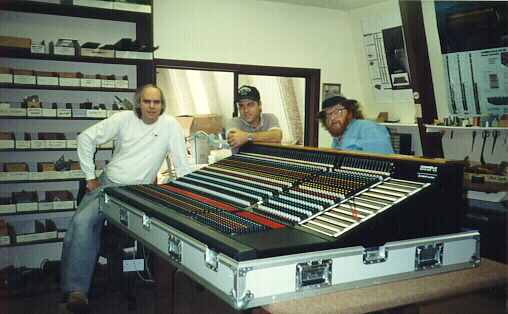
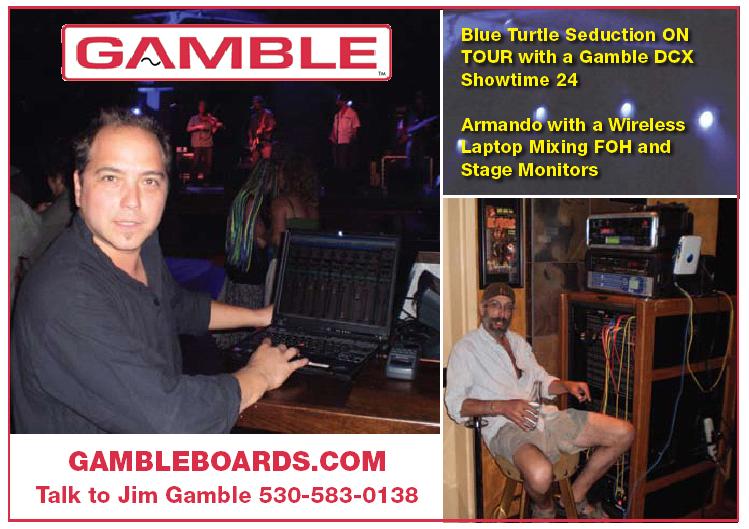
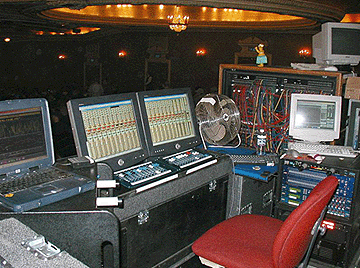
The 1990s brought a shift from all-analog boards to digitally-controlled analog designs, the DCX series, including the Showtime, Cabaret, and Event 40/60 models, each using digital pots to automate what were still fundamentally analog signal paths. The DCX line was shown at AES in San Francisco and NSCA, picked up coverage in Mix Magazine, and earned a TEC Award nomination in 2000.

2000s to Today: The DCX-60, Hand-Built in Lake Tahoe
The DCX-60, the console this software controls, is still hand-assembled by Jim Gamble Associates at “Secret Mountain Laboratory” in Lake Tahoe, CA: boards hand-soldered with leaded SN63 solder and hand-cleaned with alcohol, on the reasoning that it’s the only way to guarantee 100% reliability on tour. Live Sound magazine profiled the DCX’s design in its March/April 2001 issue. Only about ten DCX consoles exist, and between them they’ve reportedly mixed more than 20,000 live shows. They’re still touring today: Gamble DCX-60s have run front-of-house for String Cheese Incident and Umphrey’s McGee in recent years.
Read the original Live Sound design article for Gamble’s own account of building the DCX, including his reasoning on digital pots versus VCAs.
Team Gamble
Gamble’s own site credits the people behind the DCX project: Mary Fran, Kevin Korecky (AutoCAD, packaging, power supplies), Blake Beeman (DCX project manager, PCB layout, webmaster), Lawrence Rambo (patchbay and rack wiring), Hristo Doichev and Francis Styck (the software side; Styck’s name lives on today as the maintainer of the GitHub repo above), Dennis Fink and John Petrucelli (digital and analog design), Michael Short (wrote the console’s BIOS and network system), Lou Janis (digital design and backplane network), and Jim Plehn (investor).
Sources & Further Reading
- styck/Vacs-Client on GitHub, the modernized VACS client source
- gambleboards.com, Jim Gamble Associates
- Jim Gamble oral history, NAMM.org
- Jim Gamble EX56 schematics discussion, GroupDIY Audio Forum
- SCI Gamble DCX Console, Internet Archive

Amazon and the Amazon logo are trademarks of Amazon.com, Inc, or its affiliates.